According to current research, the amphibian fauna of Kopaonik National Park is moderately rich. The presence of 9 species of amphibians has been confirmed by detailed research in recent years. An important feature of amphibians is that they are sensitive to changes in their habitat, so monitoring the population of these species can quantify the negative impact of humans on nature. The main threatening factors for these groups are habitat loss and fragmentation, pollution and excessive human disturbance. Of the strictly protected species of amphibians for R. Serbia in “Kopaonik” National Park: spotted salamander (Salamandra salamandra), mountain marmot (Ichthyosaura alpestris), small marmot (Lissotriton vulgaris), eastern large-headed marmot (Triturus macedonicus), grass frog (Rana temporaria), yellow-bellied frog (Bombina variegata), common toad (Bufo bufo) and toad (Hyla arborea). Among the protected species, the large green frog (Pelophylax ridibundus) was recorded
Frogs
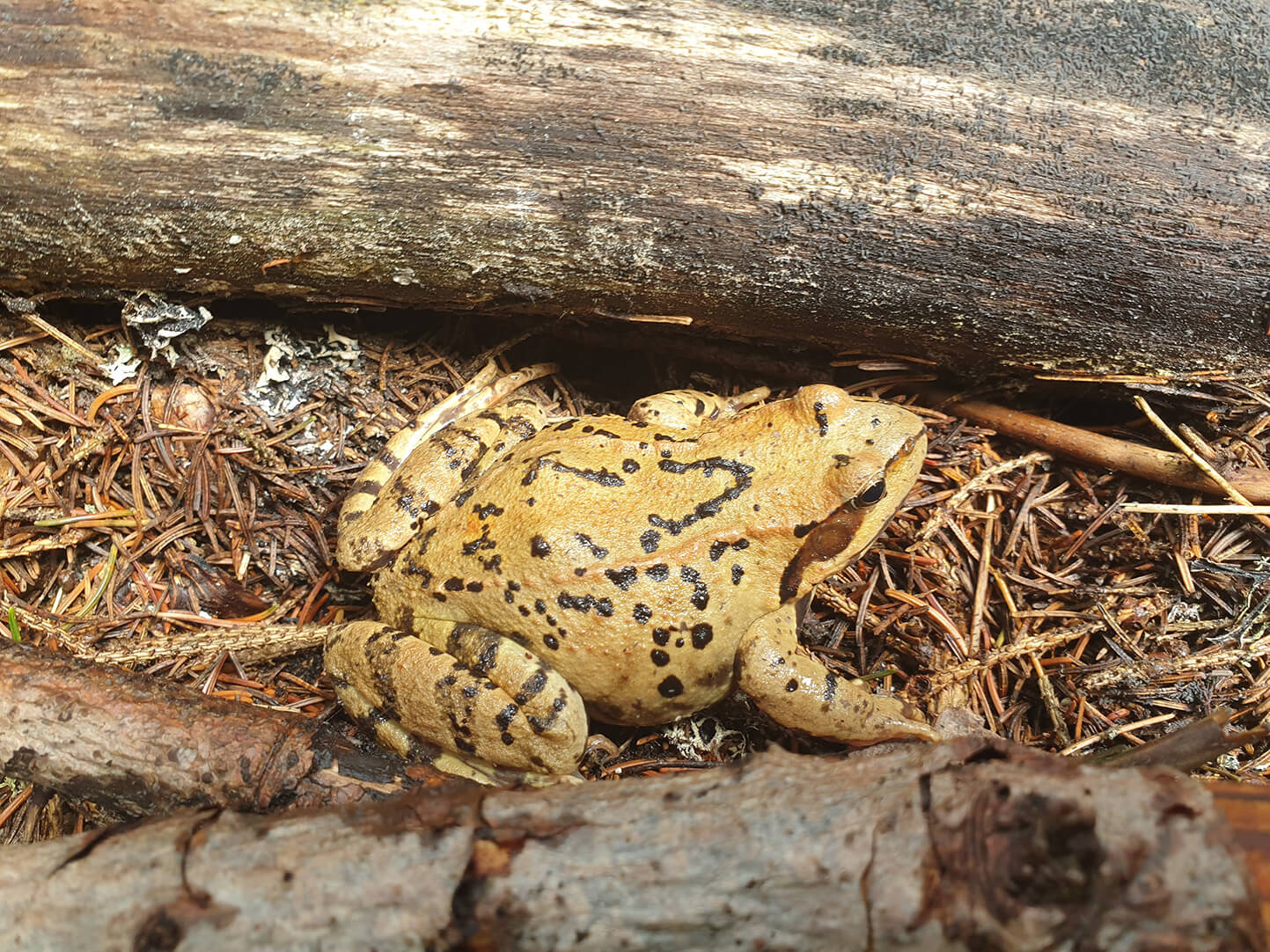
This is a widespread brown frog especially in northern, central and western Europe where it is the most common frog. In the east it stretches to the Urals. It is absent from the Iberian Peninsula, the south of Italy and the southern parts of the Balkan Peninsula. Rana temporaria is aquatic only during mating. It can be found in various terrestrial habitats, often at higher altitudes, especially in the southern part of the range. It mostly lives in wet forests and marshy meadows, as well as by streams. It is a robust-looking brown frog that is no larger than 10 cm. Her limbs are relatively short, with the heel joint rarely exceeding the tip of the muzzle. The head is broad with a short and blunt muzzle. The color of the body is very variable from gray, pink to reddish-brown with dark spots. The temporal stain is prominent. The ventral side of the body is mostly marbled with or without various spots.
The big green frog lives in most of Europe, in the Asian part of Russia and in Central Asia. It is mainly an inhabitant of plains or lowlands, although it is also common in mountainous areas where it can be found at an altitude of over 2,000 m. It inhabits almost all types of water, from small ponds to rivers and lakes. The big green frog is a distinctly riparian species, meaning that it spends most of its time on the shores of aquatic habitats. It is the largest European frog up to 15 cm long (sometimes up to 17 cm). The body is robustly built with a pointed snout and the color ranges from green to olive-brown with black and darker irregular spots. Their ventral side is whitish, usually gray or black marbled. They have no yellow color on their thighs. The webbed skins on the hind limbs reach the tips of the fingers.


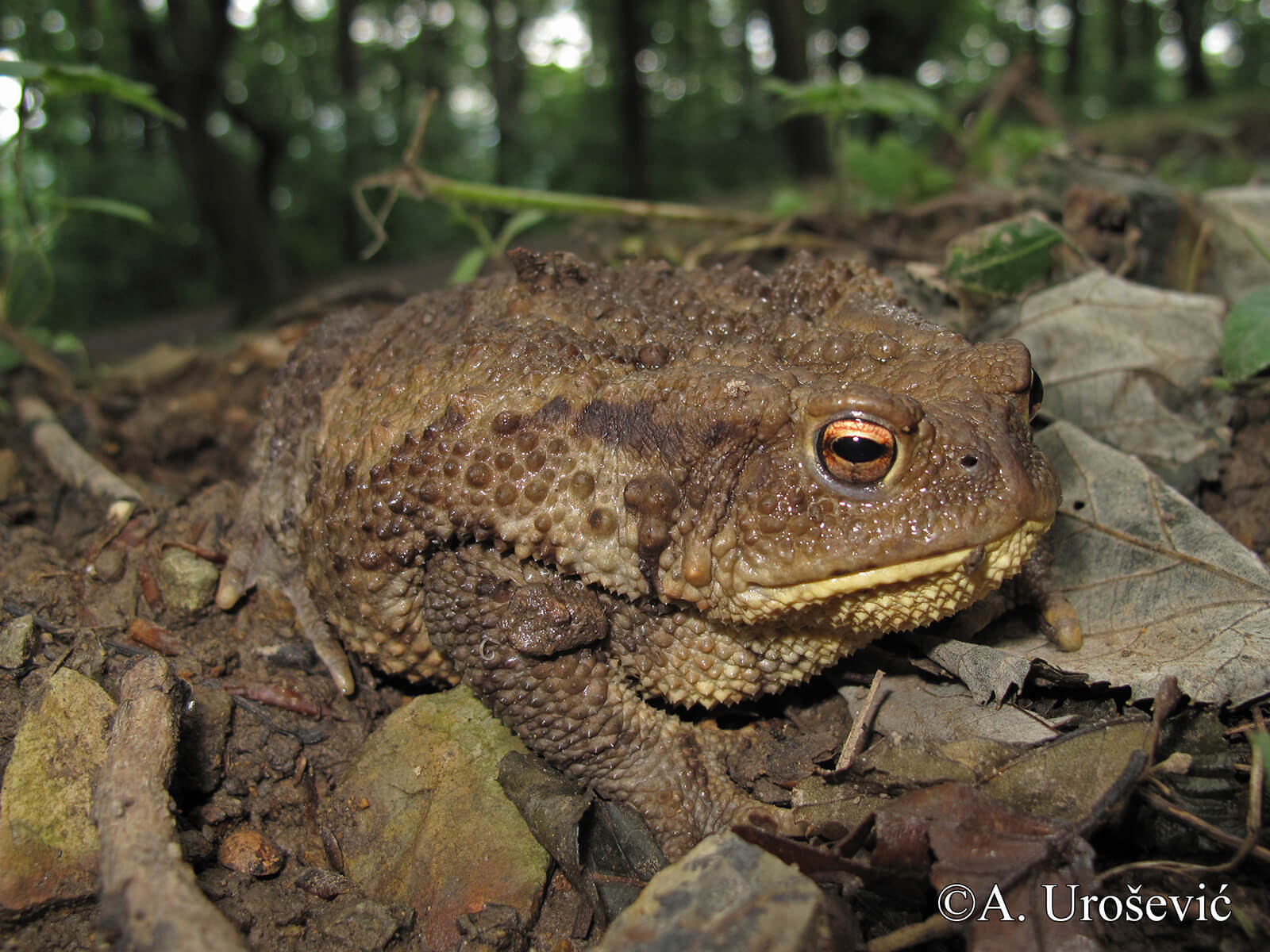
The common toad is widely distributed in Europe (except Ireland, Malta and Crete), northwestern Africa and Palearctic Asia as far as Japan. These are predominantly terrestrial amphibians present in all types of forests, especially swamp and coniferous ones. It can also be found in thickets, parks and backyards, while avoiding wide open spaces. The body is robust, up to 15 cm in size. The coloring is uniform, usually different shades of dark color with numerous nodules which are actually enlarged skin glands. The belly is light gray or yellow gray. Behind the eyes there are noticeable parotid or parotid glands in the shape of a crescent containing secretions, which serve as a defense against predators in these animals.
Yellow-bellied warbler (Bombina variegata)
The range of the species includes central and southern Europe, with the exception of the Iberian Peninsula, southern Greece, and Sicily. A distinctly aquatic species that can be found in large numbers even in very temporary habitats. As a rule, it inhabits hilly and mountainous areas, in the south of the range up to 2100 m above sea level. The body is small and stocky, 4-5 cm in size. The upper side of the body is mostly dark, gray-brown with warty growths ending in black spines. The ventral side of the body is intensely colored yellow-orange with black spots on which there are sometimes white dots. In case of danger, these frogs show a colorful belly, which should warn the predator of the toxic secretion of the skin glands.